Austin Area Wildlife Rehabilitation, Inc. |
info@austinareawildliferehab.org |
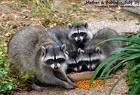
RaccoonsRaccoons are known for making thumps and bumps at night, sounding like sumo wrestlers at dusk and just before dawn. Raccoons are nocturnal and are basically nondestructive except to enlarge an existing hole for entry/exit. They are non-aggressive to cats and opossums but may fight aggressive dogs. They generally will not challenge people unless cornered or sick.
Raccoons sleep during the day and may go out at night several times for food. A single raccoon in spring or summer is probably a mother with babies. Baby raccoons cannot survive on their own until they reach an appropriate age. Babies will usually follow their mother out of the nest at 10 weeks of age and will stay with her for several months. Raccoons are omnivorous, relying primarily on acorns, crawfish, grapes, insects, fish, birds, snakes and rats for food. Keep garbage cans secure with bungee cords, and use metal cans with tight fitting lids.
Most people think the humane thing to do is trap the raccoon and relocate it. They usually don't realize the babies are there until it's too late. Studies have shown that trapping and relocating is not usually successful (90% die within one year), as they don't know where to find food. Additionally, they have to fight for a position in the pecking order of the other raccoons already living in the area. A relocated animal usually ends up as road kill.
To convince a raccoon to move her babies out of an attic/chimney follow these simple steps:
- Find out where the animal is entering and exiting your house.
- Rub dog hair around the entrance/exit spot, and/or spray fox/predator urine (can be bought at sporting goods stores) around entrance/exit area, and/or continuously light their den, and/or place a radio nearby tuned to an all-talk or hard rock station.
- Check the den each evening between 8-11 PM. When convinced the animal has moved out (it should take no more than a week for the mother to move the babies), make the repairs to the property. If you don't, there will be a steady stream of animals (rats, squirrels, opossums, or more raccoons) using this spot as a den site. It is imperative that the entrance/exit is closed.
- If the raccoons are in the chimney, you can make a ladder out of old sheets, drop it down the chimney, and secure it with a rope. Then spray the area with fox/predator urine and give the animals time to get out. It usually takes a couple of days. Then cap the chimney.
- Scare tactics, such as rubber snakes (or 18 inch pieces of black hose) and/or pinwheels, mylar balloons, or strips of aluminum foil can be used to keep raccoons out of the yard.
|
For
Membership Information, Click
Here.
|
|
For Contact Information, Click
Here.
|